
Updated November 26, 2026.
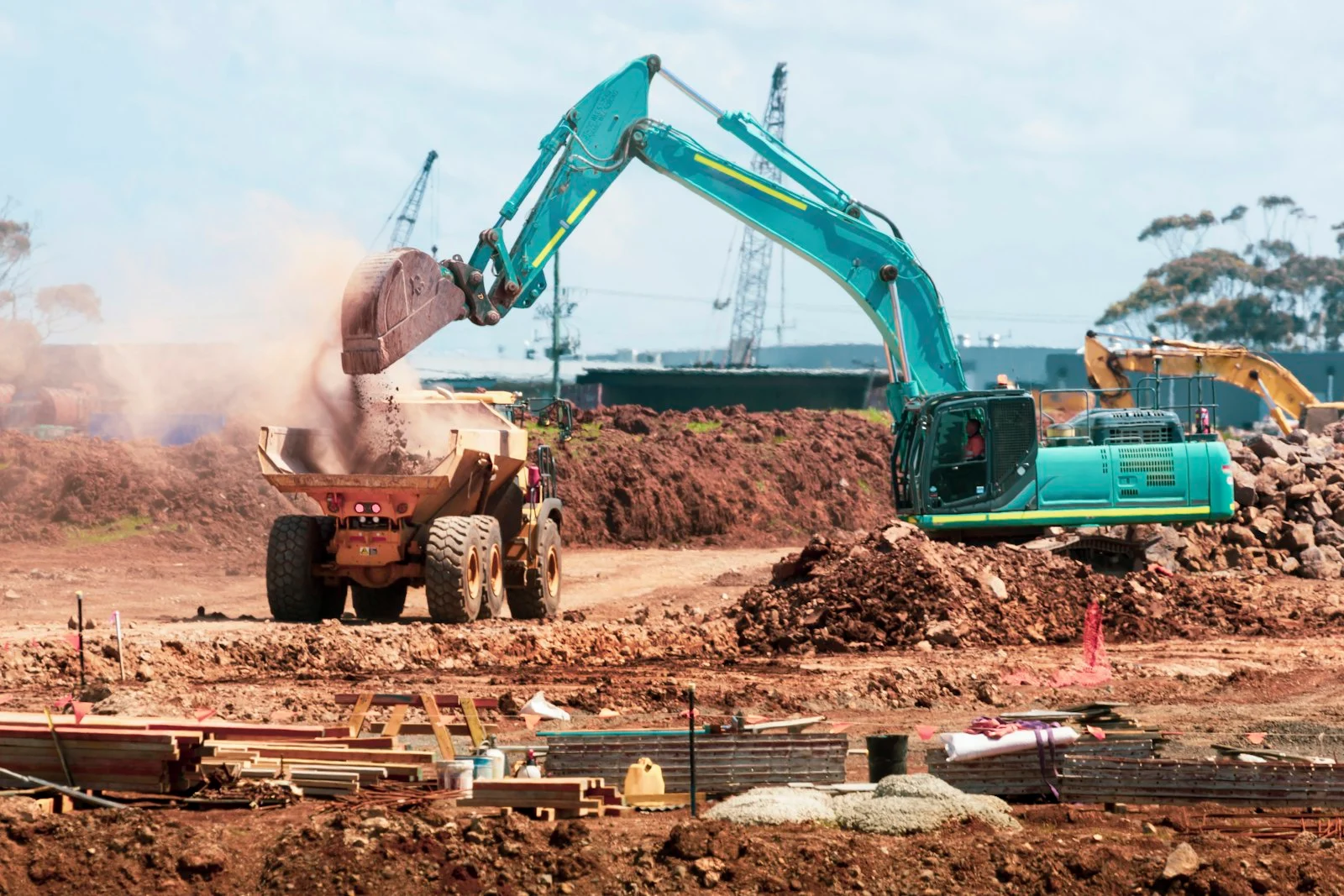
Photo: Troy Mortier / Unsplash.
Equipment financing helps a business acquire machinery, vehicles or technology through a loan or lease. With a loan, you generally own the asset and the lender takes a security interest. With a lease, the lessor owns it and you pay to use it. So how does equipment financing work, and what should you compare before signing?
It is a large market. The US equipment finance industry reached an estimated $1.51 trillion in 2025, and about 55.2% of all equipment and software investment was financed, according to the Equipment Leasing and Finance Association (ELFA).
How Equipment Financing Works
For an equipment loan, the process usually follows these steps. A lease uses a different ownership structure.
- Get a quote. The vendor gives you a written quote or invoice for the equipment.
- Apply. You send the quote and your financials to a bank, an equipment finance company or an SBA lender.
- Funding: the lender disburses the approved amount under the agreement, often directly to the vendor. You cover any required down payment.
- Security interest: the lender documents its claim on the asset. A UCC filing is common, while titled vehicles and some other assets follow different perfection rules.
- You repay. Payments follow the schedule in your agreement, such as a fixed monthly amount.
- Payoff: obtain confirmation that the secured obligations are satisfied and arrange the appropriate lien release or termination documents.
For commercial collateral, UCC §9-513 provides a termination-statement process following an authenticated demand when its conditions are met. Do not assume the public filing disappears automatically after your last payment. Check the lien scope and payoff requirements in the agreement.
How does equipment financing work? Choose the structure
An equipment loan lets you own the asset subject to the lender’s security interest.
A lease lets you use the lessor’s asset. Check return, renewal and purchase options.
Budget separately for materials and operating expenses, with financing suited to those costs.
Framework based on loan and lease mechanics; confirm the contract terms.
Equipment Loan vs. Equipment Lease
There are two main structures. With a loan, you own the equipment from day one and the lender holds a lien. With a lease, the finance company owns it and you pay to use it. The contract may give you an option to buy at the end.
Feature | Equipment loan | Equipment lease |
|---|---|---|
Who owns it | You, subject to the lender's lien | The lessor, unless ownership transfers at the end |
Upfront cash | A down payment may apply | May be the first payment or a deposit |
End of term | You own it free and clear | Return it, renew, or buy it |
Balance sheet | Asset and loan | Right-of-use asset and lease liability |
Fits best when | You will use it for most of its life | It becomes outdated quickly or you need it for a set period |
For businesses reporting under US GAAP, ASC 842 generally puts finance and operating leases on the balance sheet. A short-term-lease accounting election may apply to leases of 12 months or less that meet the standard’s conditions. Ask your accountant how your agreement should be recorded.
Equipment Financing Rates in 2026
Equipment financing rates vary by borrower, asset and contract. Use published benchmarks to understand a quote, then compare the actual offer, including fees and repayment terms.
- Prime rate: 7.00%, in the Federal Reserve’s November 25, 2026 H.15 release.
- Bank term loans: the median variable rate on new small-business term loans was about 7% at urban banks and 6.7% at rural banks in the second quarter of 2026, according to the Kansas City Fed. That covers all term loans, not equipment alone.
- SBA 7(a): SBA’s variable-rate limits range from the base rate plus 3.0 to 6.5 percentage points, depending on loan size.
- SBA 504: the CDC/SBA debenture portion carries a fixed rate. The third-party bank loan is a separate component with its own terms. Compare both components and fees.
At a 7.00% prime base rate, the published SBA spreads produce these ceilings. They are maximums under that formula; your approved rate may be lower.
SBA 7(a) loan size | Maximum spread | Maximum variable rate at 7.00% prime |
|---|---|---|
$50,000 or less | Base + 6.5% | 13.5% |
$50,001 to $250,000 | Base + 6.0% | 13.0% |
$250,001 to $350,000 | Base + 4.5% | 11.5% |
Over $350,000 | Base + 3.0% | 10.0% |
Here is what the rate does to the payment in one example: a $150,000 machine with 10% down, so $135,000 financed over 60 months.
| Illustrative annual rate | Monthly payment | Approximate total interest |
|---|---|---|
| 7.00% | $2,673.16 | $25,389.71 |
| 9.00% | $2,802.38 | $33,142.68 |
| 12.00% | $3,003.00 | $45,180.03 |
The example assumes a fixed rate, 60 equal monthly payments and no fees. Five percentage points add about $330 a month and nearly $20,000 in interest. Rounding the displayed payment can produce a small final-payment adjustment.

The rate is only part of the cost. The term, down payment and lien matter too.
Equipment Financing Terms
Lenders match the term to how long the equipment will last.
- Length: an SBA 7(a) loan for equipment runs 10 years or less, unless the equipment's useful life is longer. SBA 504 loans come in 10, 20 and 25-year maturities (SBA lists 10 years for equipment) and fund equipment with at least 10 years of remaining useful life.
SBA 7(a) loans generally have a $5 million maximum, with lower ceilings for some delivery methods. The 504 program limits apply to the CDC/SBA portion, generally $5 million, or $5.5 million for qualifying manufacturing and energy projects. They are not a cap on the total project cost.
The 504 borrower contribution generally starts at 10% and can be higher for new businesses or special-purpose properties. Conventional lenders set their own down-payment requirements.
Equipment Financing Requirements: What Lenders Check
Equipment financing requirements depend on the lender and loan structure. Credit history, repayment ability and the asset’s value all matter. Prepare the following:
- The vendor's quote or invoice, with make, model and serial number.
- Business financial statements and tax returns, so the lender can test whether cash flow covers the payment.
- Business and personal credit history. Our guide on how to build business credit covers the business side.
- An appraisal or inspection if the equipment is used.
- For an SBA application, the borrower forms and supporting documents requested by the participating lender.
ELFA’s October 2026 index, released November 24 reports a 77.5% credit approval rate and $12.5 billion in seasonally adjusted new business volume among surveyed member companies. These are survey results, rather than your individual approval odds.
Tax Treatment: Section 179 and Bonus Depreciation
Financing does not by itself prevent a depreciation deduction. IRS Publication 946 lists a 2026 Section 179 maximum of $2,560,000, reduced when qualifying property placed in service exceeds $4,090,000. It also describes 100% bonus depreciation for certain qualifying property acquired and placed in service after January 19, 2025. Eligibility and elections matter.
Section 179 applies to property you acquire by purchase for business use, and the deduction can't exceed your business taxable income (IRS Publication 946). Whether a lease counts as a purchase for tax purposes depends on its terms, so confirm with your tax adviser. Our guides to the Section 179 deduction and bonus depreciation in 2026 go deeper.
How to Compare Equipment Financing Offers
Before you sign, compare these for each offer:
- Total cost: every payment plus fees and any end-of-lease buyout, compared with the cash price.
- Rate type: fixed, or variable and tied to prime. Check today's prime in the Fed's H.15 release.
- Term against useful life: avoid paying for a machine after it has stopped earning.
- Lien scope: a lien on the one machine is narrower than a blanket lien on all business assets. Ask which one the lender will file.
Equipment financing: compare the full commitment
Compare total payments, useful life, lien scope and the cost of early repayment.
Check lease duration, usage limits, return condition and any buyout.
Match the repayment deadline to a conservative cash-flow plan, including a sales delay.
Use-case checklist. Loan, lease and working-capital terms depend on the agreement.
If you are choosing a provider, see our equipment financing comparison. For the cash needed around a purchase, read equipment financing vs. working capital.
Understanding how equipment financing works also means planning for the purchases that follow installation.
Where Drip Capital Fits: Funding What the Equipment Runs On
A new machine can increase the inventory and materials you need before you collect from customers. Drip Capital’s working-capital products can help with that next stage.
With Vendor Financing, Drip Capital pays vendors directly and you repay in up to 90 days, subject to underwriting, approval and agreed terms. This can help fund inventory and materials while you wait to collect customer payments. Confirm the purchases covered by your facility and plan around its repayment dates.
For operating needs, Drip Capital’s Line of Credit credits approved draws to your business account. Each draw is repaid in six monthly installments. The amount available depends on the approved facility and its terms.
Talk to Drip Capital about the funding that fits your business.
Frequently Asked Questions
How does equipment financing work?
With an equipment loan, the lender funds the approved purchase and takes a security interest while you repay under the agreement. With a lease, the lessor generally owns the equipment and you pay to use it. Check ownership, security and end-of-term obligations before signing.
What are equipment financing rates right now?
Rates depend on the lender, borrower and asset. Prime was 7.00% in the Fed’s November 25, 2026 release; at that base, the SBA 7(a) variable-rate ceilings shown above run from 10.0% to 13.5%. Compare the actual rate and fees in each offer.
How hard is it to get equipment financing?
Lenders assess cash flow, credit history and the equipment. ELFA’s October 2026 member-company survey reported 77.5% approval, but that aggregate does not predict the outcome of your application.
What credit score do you need for equipment financing?
Ask the lender which credit model and cutoff it uses. SBA discontinued its SBSS screening requirement for 7(a) Small loans effective March 1, 2026; lenders still conduct credit analysis. A score alone does not establish eligibility or repayment ability.
How long are equipment loan terms?
Terms follow the equipment's useful life. An SBA 7(a) loan for equipment runs 10 years or less unless the equipment lasts longer, and SBA 504 loans, where SBA lists 10 years for equipment, need at least 10 years of useful life remaining. Conventional lenders set their own terms, so compare the term with how long you will use the machine.
Is it better to lease or buy equipment?
Buy with a loan if you will use the equipment for most of its life and want to own it. Lease if it becomes outdated quickly or you need it for a fixed period. Compare the total of all payments, fees and any buyout, and ask your accountant how the lease is classified, because most leases now appear on the balance sheet.
Is financed equipment tax deductible?
Qualifying equipment may be deductible through Section 179 or depreciation, subject to the tax rules. For bonus depreciation, both acquisition and placed-in-service dates matter. The tax treatment of a lease depends on its terms; review the agreement with your tax adviser.