
Cover photo: Leon Seibert / Unsplash. Illustrative image.
Business loan requirements usually come back to a few questions: what is the money for, can the business repay it, and do the records support the application? There is no single credit score, revenue figure or document list that qualifies every business.
The Minority Business Development Agency notes that lenders have different eligibility requirements but often request similar records. Here is what lenders check, and how to prepare without turning the application into a paperwork scramble.
Six things lenders commonly review
1. Your reason for borrowing
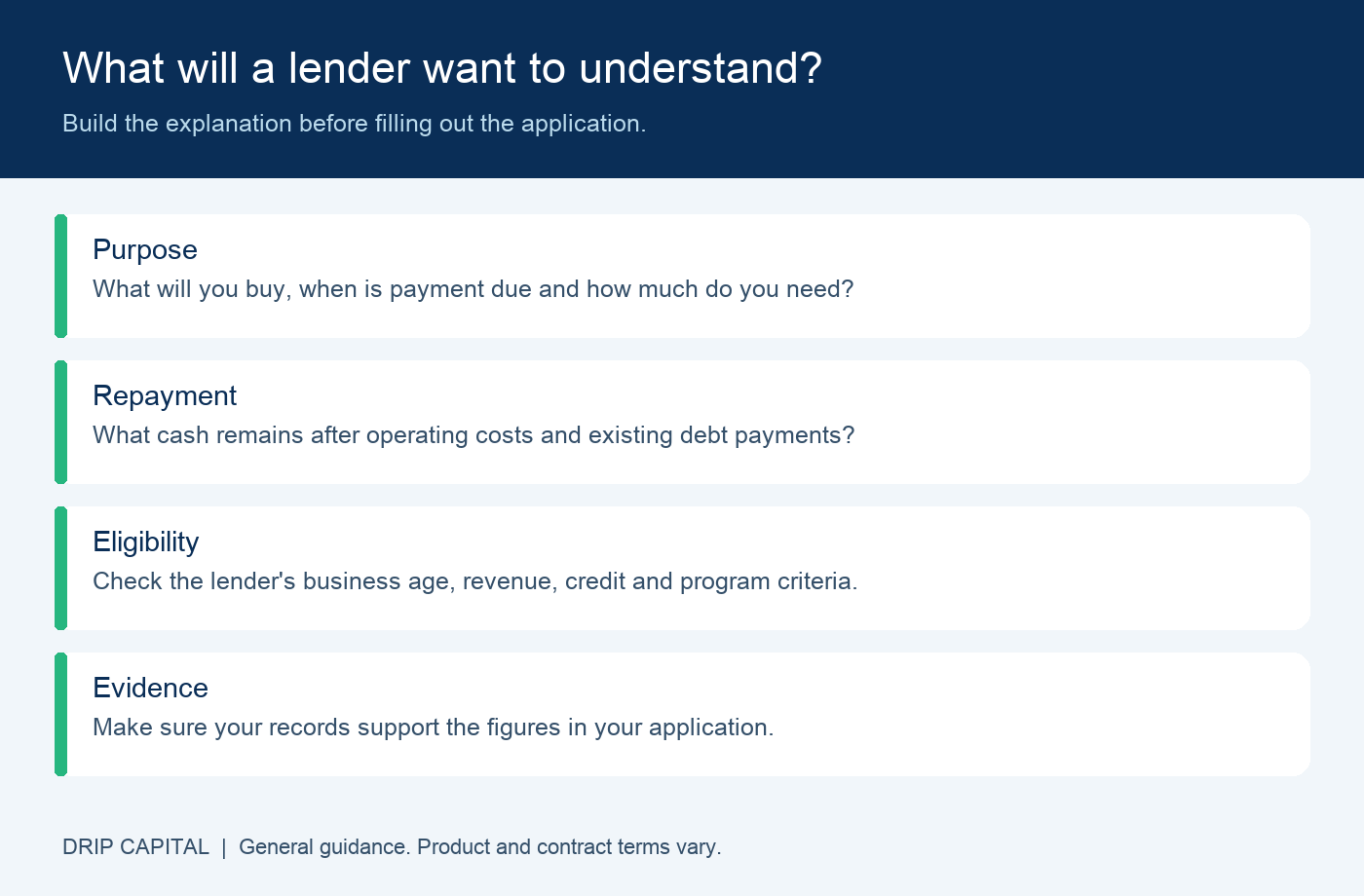
Be specific about the purchase or cash gap. Bank of America identifies purpose, amount, credit and repayment capacity among lending considerations. “We need working capital” gives less context than a vendor quote, expected delivery date and customer payment schedule. Match the funding request to the expense rather than asking for the largest amount available.
2. Time in business and revenue
Business loan requirements vary by lender and product. Ask for them before preparing a full application. A business that misses one program's requirements may need a different product; the existence of sales alone does not establish eligibility.
3. Cash available for repayment
Revenue does not tell the whole story. A lender will want to understand operating expenses, existing debt and the cash left to support new payments. The SBA's 7(a) eligibility rules, for example, require creditworthiness and a reasonable assurance of repayment.
4. Credit history
Depending on the product, a lender may review business and owner credit. Check reports for errors and be ready to explain late payments or other problems. Do not assume an advertised minimum score means automatic approval.
5. Assets or invoices supporting the funding
Requirements differ for unsecured borrowing, equipment-backed loans and Invoice Financing. Bank of America's application guide outlines common records and secured-loan considerations. Ask what assets, invoices or other security the lender needs and whether an existing financing agreement affects the application.
6. Ownership and business eligibility
Prepare business registration and ownership details. Industry, location, legal status and program-specific ownership rules can affect eligibility. Ask the lender to confirm its current criteria rather than relying on a generic checklist.
Business loan documents to prepare
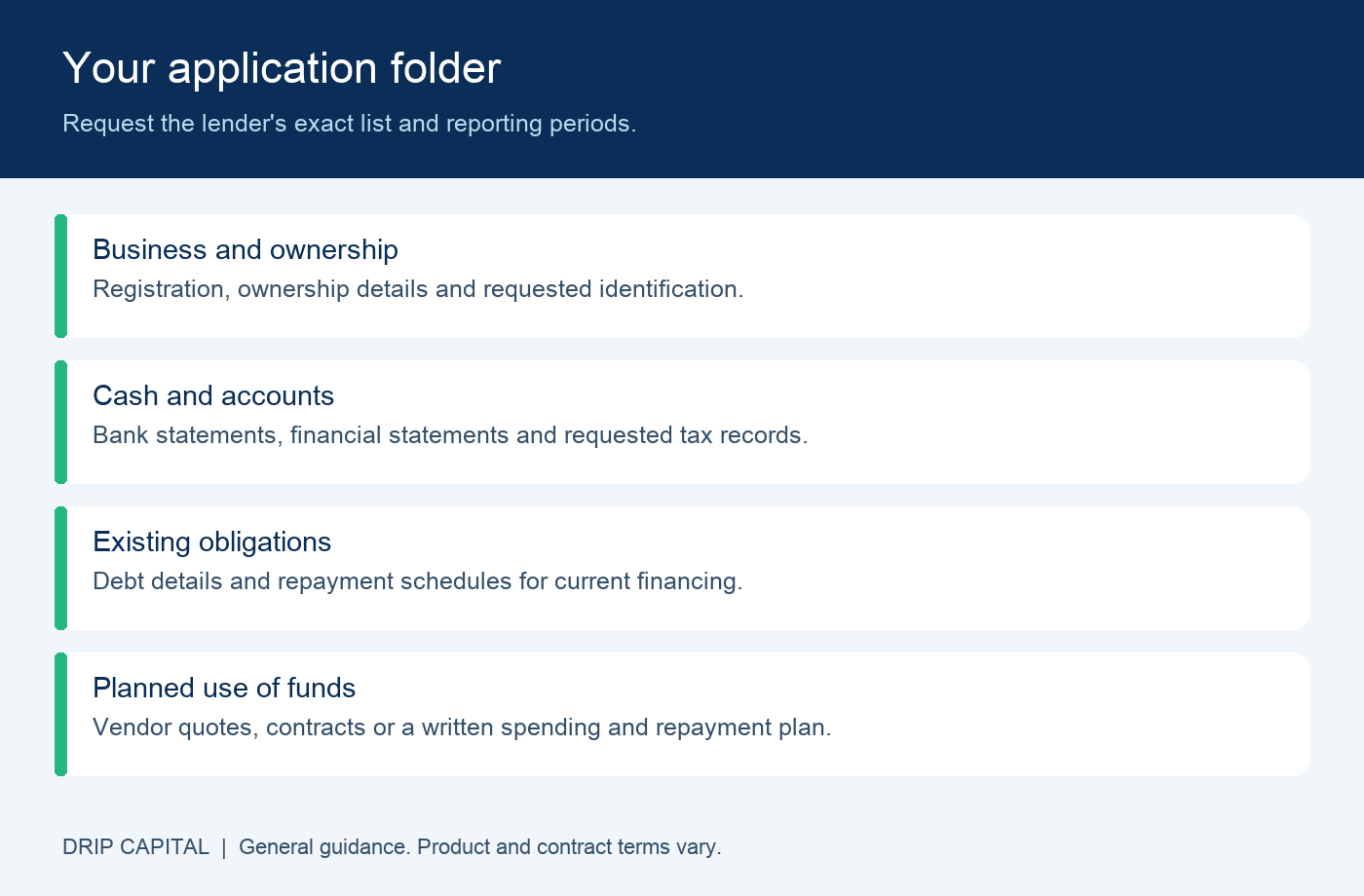
Common requests include bank statements, financial statements, tax records, existing debt details and a description of how the funds will be used. The required periods and supporting documents vary. Get the lender's list first.

Organize business loan documents into one folder and use the same business name across the application and supporting records. If a bank statement and your accounts show different figures, explain why.
By the numbers: what is left for a new payment?
Here is an illustrative cash check, not a lender's approval formula. Imagine $30,000 comes in during a month and $24,000 goes out before the proposed loan payment.
A new $4,000 payment would leave $2,000 before unexpected costs. Repeat the exercise for a slower month. This helps you ask whether the payment fits your business, even if the lender offers a larger amount.
How to qualify for a business loan: prepare the explanation
Understanding how to qualify for a business loan starts with the lender's eligibility criteria. Then show how you will use the funds and repay them. Explain seasonal sales, one-off expenses and overdue customer invoices so the reviewer can understand the numbers. Preparation helps the review; it does not guarantee approval.
Separate temporary gaps from recurring losses
An order awaiting payment creates a different funding need from expenses that exceed cash receipts every month. Map the timing with a working capital calculator, then discuss a repayment schedule that fits that timing.
Choose the product before collecting every form
A Line of Credit may suit recurring borrowing needs. Funding a specific vendor purchase may call for a different structure. Our Purchase Order Financing comparison lists questions to ask about order-based funding.
Ask what could delay the decision
Confirm which records are missing, whether the lender needs updated figures and when it expects to respond. Keep paying existing obligations on time. Avoid committing to a purchase on the assumption that an application will be approved.
Where Drip Capital fits
If the immediate need is paying for goods, Drip Capital's Vendor Financing pays vendors directly, with repayment terms of up to 90 days. Underwriting, business eligibility and approval apply. Discuss the purchase and cash cycle with the team to see whether the product fits.
Frequently asked questions
What are the minimum business loan requirements?
They vary by lender and product. Confirm revenue, business age, credit and other eligibility criteria before applying, and ask which records support each requirement.
Do all business loans require collateral?
No single collateral rule applies to every business loan. Ask the lender what security its specific product requires and how existing financing affects that requirement.
How many months of bank statements do I need?
The lender sets the period and may ask for additional records. Request its current checklist so you can provide a complete, consistent application.